
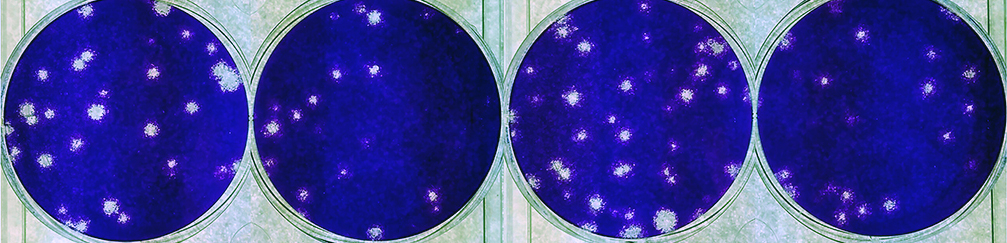
To gain preferential access to the protein synthesis machinery and to disrupt induction of antiviral responses by infected cell many viruses block host gene expression. This blockade is called host shutoff and it is mediated by viral factors that either destroy host messenger RNAs (mRNAs) or interfere with their synthesis.
Influenza A virus (IAV) and severe acute respiratory syndrome coronavirus 2 (SARS-CoV-2), two respiratory viruses well known for their pandemic potential, encode potent host shutoff endonucleases that destroy host messenger RNAs. IAV endonuclease is called PA-X, and SARS-CoV-2 endonuclease is called Nsp1. Our laboratory studies these nucleases, aiming to determine how they function and contribute to the ability of these viruses to infect wide variety of host species and cause pandemics.
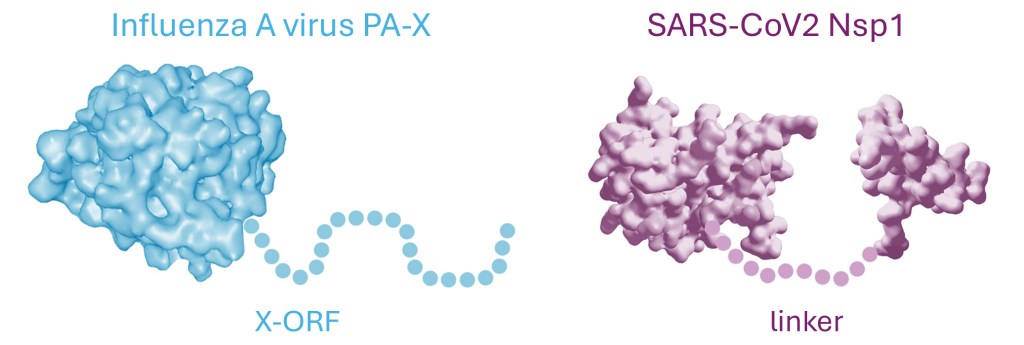
A short 61 amino acid C-terminal region of PA-X, termed X-ORF, is highly conserved in mammalian and avian IAV strains and is necessary for PA-X shutoff activity. Our studies show that the X-ORF is very important for PA-X function, and that PA-X can degrade both cytoplasmic and nuclear host mRNAs.
Nsp1 is the first protein translated from the SARS-CoV-2 genomic RNA. It selectively blocks translation and degrades cellular mRNAs while viral mRNAs are not only spared, but are translated more efficiently in the presence of Nsp1. Our work has shown that sequence features of viral mRNAs that make them resistant to Nsp1 are also present in some host mRNAs, which similarly escape Nsp1 shutoff.
By depleting cytoplasmic mRNAs, both PA-X and Nsp1 block formation of biomolecular condensates called stress granules (SGs). SG formation is triggered by various types of stress, including viral infections. How SG inhibition influences viral replication and host antiviral responses remains poorly understood. Elucidating the role of SG formation in cellular stress responses is one of the research themes of our laboratory.

